Lazlo Institute Symposium
The Future of Medicine: Reflections from a Symposium on the New Paradigm
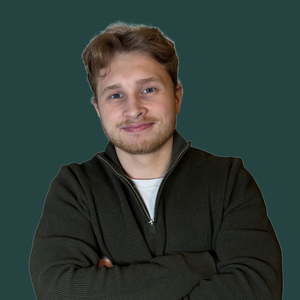
In May of last year, I had the honor of participating in an international symposium organized by the Lazlo Institute titled: “Where Is Medicine Going? The New Paradigm: Expectations and Hopes.”
Even before the presentations began, the title itself carried a question that felt very close to the work I have been developing for many years. Where is medicine going? And perhaps even more importantly, what kind of human being is medicine preparing to meet? That question matters because modern medicine has accomplished extraordinary things. Its ability to diagnose, intervene, operate, stabilize, and respond to acute conditions has saved countless lives. I have great respect for that. But there is another part of the healing conversation that often remains outside the clinical frame. A person does not arrive as a diagnosis alone. They arrive with a body, a history, an emotional life, a family imprint, a social environment, a spiritual longing, and a deep need to be seen as more than the condition they are carrying.
This was the heart of what I wanted to bring into the symposium.
The event gathered physicians, researchers, scientists, and thinkers who were approaching the future of medicine from different perspectives. Some spoke from biology. Some from clinical practice. Some from consciousness studies, systems theory, or integrative healing. But beneath these different languages, I felt a shared recognition: medicine is being asked to widen its view. Not to reject science. Not to replace one system with another. But to remember the whole person.
In my presentation, I spoke about the role of emotional healing in this new paradigm and how my work eventually became Total Emotional Release. My years in Hawaii, and my exposure to Hawaiian healing traditions, shaped me deeply. Concepts such as “Mana”, understood as vital life force, and the awareness of unseen relational connections helped me recognize that healing has never belonged only to the physical body. In many traditional cultures, healing was understood as relational. It involved the body, the family, the ancestors, the environment, the spirit, and the way a person remained connected to life.
Today, I would express that same understanding through the language of my own work.
In “The New Medicine of Consciousness”, I speak about medicine needing to move beyond symptom management and toward a more complete understanding of the human being. A symptom may appear in the body, but the body does not live separately from emotion, memory, environment, relationship, and meaning. The body is not an isolated machine. It is a living participant in the person’s entire experience.
This is also where “The Four Pillars Theory” becomes important. Many of the emotional patterns people carry are not random. They are shaped through family programming, social conditioning, environment, and emotional expression. These forces build an internal architecture long before a person fully understands themselves. Over time, the body learns how to adapt, protect, brace, collapse, endure, or remain silent. Then one day, what has been carried internally may begin to speak through the body. This does not mean that every illness is emotional. That would be too simplistic, and it would not respect the intelligence or complexity of biology. But it does mean that illness, suffering, and healing should not be separated from the life of the person experiencing them.
That distinction matters.
When we speak about the future of medicine, we are not simply speaking about better technology or more advanced treatment, although both are important. We are speaking about whether medicine can become more conscious of the person behind the condition. Can medicine make room for emotional history? Can it recognize the weight of unresolved experience? Can it understand how family patterns, social pressure, and environment shape the way a person lives inside the body? Can it support not only survival, but coherence? For me, coherence is one of the essential words in this conversation.
Health is not only the absence of disease. It is the restoration of relationship within the person. Relationship between the body and the emotions. Between the mind and the nervous system. Between the past and the present. Between what has been carried and what is now ready to be understood. When these parts remain disconnected, a person may function, but not necessarily feel whole. This is why dialogue alone is not always enough, and why physical treatment alone may also remain incomplete. The mind may understand a pattern while the body continues to hold it. The body may receive treatment while the emotional reservoir remains full. A person may know the story intellectually, but the posture, breath, fascia, and nervous system may still be organized around protection.
This is where Total Emotional Release enters the conversation.
TER is not about forcing emotion out of the body. It is not about dramatic catharsis, and it is not a replacement for medical care. It is about creating the conditions where the body, emotion, awareness, and meaning can begin to participate together. In that participation, the person is no longer treated as separate parts. The body is listened to. The emotional life is respected. The story is not reduced to psychology alone. The spiritual dimension is not turned into dogma, but recognized as part of the way human beings search for meaning, continuity, forgiveness, and peace.
That brings me to The Soul.
When I speak of the soul, I am not trying to prove a belief or impose a spiritual system. I am speaking of the dimension of human experience that appears whenever ordinary language becomes too small. We see it near grief, love, conscience, beauty, memory, and the strange continuity of relationship after visible form has changed. In the context of medicine, this matters because people do not suffer only physically. They suffer in meaning. They suffer in identity. They suffer in the fear of being reduced to a condition. They suffer when their humanity is not recognized. A more complete medicine must be able to meet that.
The symposium reminded me that the future of medicine will not be created by one discipline alone. It will require science, yes, but also compassion. It will require research, but also presence. It will require better systems, but also a deeper understanding of consciousness. It will require us to look at the patient not only as someone who has something wrong, but as a whole human being whose body may be carrying a much larger conversation.
That, to me, is the new paradigm. It is not a rejection of modern medicine. It is an expansion of its humanity.
It asks us to consider that healing is not only intervention. It is integration. It is not only the management of symptoms. It is the restoration of relationship between body, emotion, consciousness, meaning, and the deeper continuity of the person’s life. And perhaps this is why the question from the symposium still feels so alive to me.
Where is medicine going? I believe it is being invited to return to the human being.
Not as a theory. Not as an ideal. But as the living center of the healing process.